Quick Background
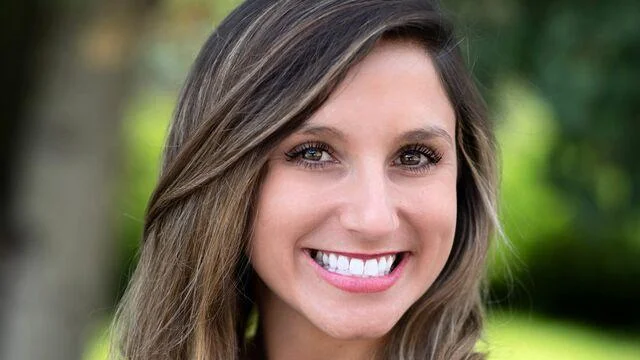 Kouri Richins
The Defendant
Kouri Richins
The Defendant
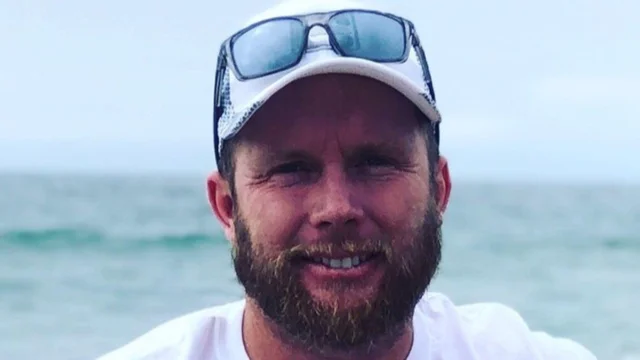 Eric Richins
The Victim
Eric Richins
The Victim
Kouri Richins — Utah mom and house-flipper, accused of murdering her husband by fentanyl poisoning on March 3–4, 2022. She has pleaded not guilty.
Eric Richins — Kouri's husband, age 39. Ran a successful stonemasonry business. Found dead in bed.
Day 2 recap: Nine witnesses. The forensic pathologist revealed toxic fentanyl levels and quetiapine — an antipsychotic prescribed to Kouri — in Eric's stomach. Chelsea Gipson testified that the night Eric died, she found zero gummies; six weeks later, they were hidden throughout the house. Full Day 2 recap here.
Chelsea Gipson: The Cross-Examination Continues
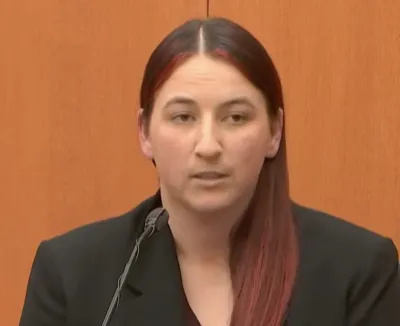
21:05 — Day 3 picked up exactly where Day 2 left off: defense attorney Kathryn Nester cross-examining the prosecution's evidence custodian. She opened by establishing Gipson's role in plain terms — "you're the evidence lady, right?" — then spent the rest of the morning systematically exposing what investigators didn't do.
The Night Eric Died: Gaps Everywhere
41:16 — Nester walked Gipson through her activity the night of March 4, 2022. Gipson arrived to assist Detective Woody in documenting the master bedroom. EMTs had already stopped CPR.
The defense established what Gipson did photograph — the bedroom, the body under a sheet, a nightstand — and, more pointedly, what she didn't:
- Never entered the kitchen. No photos of the counters, the sink, or the trash (56:53)
- Never opened the cabinet above the toilet in the master bathroom (53:17)
- Never searched the closet fully — only photographed one side
- Never went upstairs or downstairs
She also couldn't confirm whether a green jacket visible in the later Matterport 3D scan — with gummies poking out of the pocket — had been there the night of the death.
One detail the defense surfaced: a wallet on the nightstand had been moved there from the kitchen by someone at the scene before Gipson arrived (46:08). Nester asked whether that could have altered any residue underneath it. Gipson said placing a wallet on top of an object wouldn't disturb what's below — but acknowledged she didn't photograph what was underneath.
Investigation Blind Spots: Room by Room
Hover over each area to see what was missed — and what was found 40 days later.
never entered
white specks untested
from kitchen
The Pill Bottle Nobody Tested
48:09 — Some confusion surfaced around multiple hydrocodone bottles. The one from the nightstand — near Eric's body the night he died — was sent with the body to the Medical Examiner's office. Gipson never got it back. It was never tested for fentanyl residue.
"So, if there was fentanyl residue in that empty pill bottle from 2016, we won't know it because you never took it to be tested, right?"
Defense Attorney Kathryn NesterGipson confirmed: "I was never given the bottle. No."
A separate hydrocodone bottle and a quetiapine bottle — both found in the master bathroom linen closet during the April search — were in Gipson's custody. The quetiapine was prescribed to Kouri (51:07).
The Paraphernalia Question
54:10 — Nester confirmed Gipson found no drug paraphernalia the night Eric died — no bongs, vape pens, scales, or baggies. Then she pivoted: could an expired prescription bottle be considered paraphernalia if it was used to store illicit drugs?
Gipson agreed it could be. The implication was clear: Nester is seeding the idea that Eric may have been self-administering drugs stored in old pill bottles. The 2016 hydrocodone bottle — expired six years, untested, sitting in the ME's office — is now a question mark instead of a footnote.
But Gipson also confirmed that every THC gummy found in the house was stored up high, out of children's reach (53:17). That cuts both ways — it could suggest careful parenting, or deliberate concealment.
The April 13 Search Warrant
57:04 — Nester moved to the search warrant executed six weeks after Eric's death. At least five officers briefed beforehand. Gipson drove an evidence van and served as the hub for all items seized.
The defense's through-line here was clear: Kouri had no warning this was coming. She wasn't home when officers arrived (1:01:02), nobody inventoried her vehicle when she was stopped that day (1:01:20), and Nester established there was no advance notice that would have given her time to stage or remove anything.
Other details from cross:
- U.S. Postal Inspector Smoot was on scene looking for evidence of drugs mailed to the house — he came up empty (1:03:26)
- Gipson wasn't involved in searching the vehicles inside the garages
- The house had liquor bottles in the downstairs kitchen and a beer fridge in the basement — details that went unphotographed and uninventoried on the night of the death
Legal Sidebar
The jail calls incident (39:33) — Nester asked Gipson about calls between Kouri and her family that Gipson had been downloading "on about a weekly basis." When Gipson asked for clarification — "Are you talking about jail calls?" — the prosecution objected immediately. Extended sidebar.
The judge returned with an instruction: "Please do not consider or speculate at any time during this case or during your deliberations about whether the defendant was or is in custody at any time. That is not evidence of anything." The calls were referred to as "homewave calls" from that point forward.
The 911 call (24:03) — The defense moved to admit the full 911 recording. The prosecution objected on hearsay grounds, noting "broad swaths" of the call may not be admissible. The judge deferred — the 911 call will come back later in the trial.
The abrupt ending — The judge announced a scheduling conflict at 9:30 AM, recessed until 10:30, then returned to adjourn for the rest of the day. The explanation was off-mic, frustrating viewers watching the livestream. Gipson was told to return at 8:30 AM the next morning — still under oath.
Day 3 Scoreboard
Defense's Strongest Cards
- The crime scene was barely documented — no kitchen photos, no sink, no trash, no closet search, no cabinet above the toilet. Nobody entered the kitchen where the prosecution says the Moscow Mules were made
- The nightstand hydrocodone bottle was never tested — an expired 2016 bottle near Eric's body went to the ME and never came back. If it contained fentanyl residue, nobody will ever know
- Old prescription bottles could be paraphernalia — Gipson agreed an expired bottle used to store illicit drugs would qualify. The defense is building a self-administration narrative one brick at a time
Prosecution's Strongest Cards
- Chain of custody held up under cross — evidence room locked, key-card access, sign-in required. Gipson's handling of physical evidence survived every challenge Nester threw at it
- All gummies were stored high up — out of children's reach, in cabinets and top shelves. Not bedside casual use — deliberate concealment
- Postal inspector found nothing — Agent Smoot searched the house for evidence of drugs mailed to the address and came up empty, undercutting any theory about an outside source
Where the Audience Stands
Public Sentiment After Day 3
Based on ~150 comments across YouTube livestreams and r/CasesWeFollow
Slight shift toward doubt. Day 2's 87/13 split moved to roughly 80/20 after a morning that was entirely defense cross-examination. When the only voice in the room is poking holes, the holes get louder.
YouTube showed the most movement — several commenters said the state hasn't proven enough yet, and multiple viewers praised Nester's rapport with the jury.
Reddit stayed more analytical, focusing on the investigation gaps while noting this was a "medical call" response, not a murder scene — officers didn't know to search deeper because fentanyl wasn't discovered until later.
The dominant frustration across both platforms: the short day. Viewers waited hours for a trial that produced roughly 40 minutes of testimony before the judge adjourned.
Coming Up
Gipson returns to the stand tomorrow morning at 8:30 AM, still under oath with Nester's cross-examination continuing. Expect more questions about the April 13 search warrant and potentially redirect from the prosecution to shore up any gaps. The 911 call remains in limbo — the jury hasn't heard it yet, and it's shaping up to be a fight over which portions come in.
This is part of Madness & Motive's ongoing coverage of the Kouri Richins trial. Watch the full Day 3 video on YouTube.