Quick Background
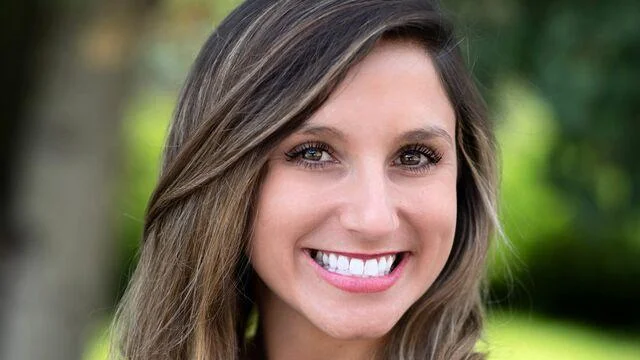 Kouri Richins
The Defendant
Kouri Richins
The Defendant
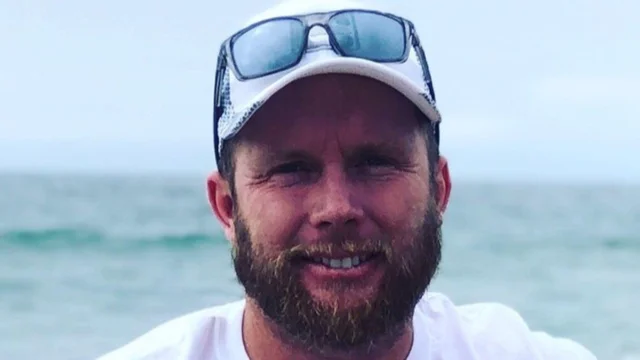 Eric Richins
The Victim
Eric Richins
The Victim
Kouri Richins — Utah mom and house-flipper, accused of murdering her husband by fentanyl poisoning on March 3–4, 2022. She has pleaded not guilty.
Eric Richins — Kouri's husband, age 39. Ran a successful stonemasonry business. Found dead in bed.
Day 3 recap: All defense, all morning. Kathryn Nester cross-examined evidence tech Chelsea Gipson on everything investigators didn't do — no kitchen photos, an untested pill bottle near Eric's body, and cabinets nobody opened. Then the word "jail" stopped the courtroom cold. Full Day 3 recap here.
Chelsea Gipson: The Final Questions
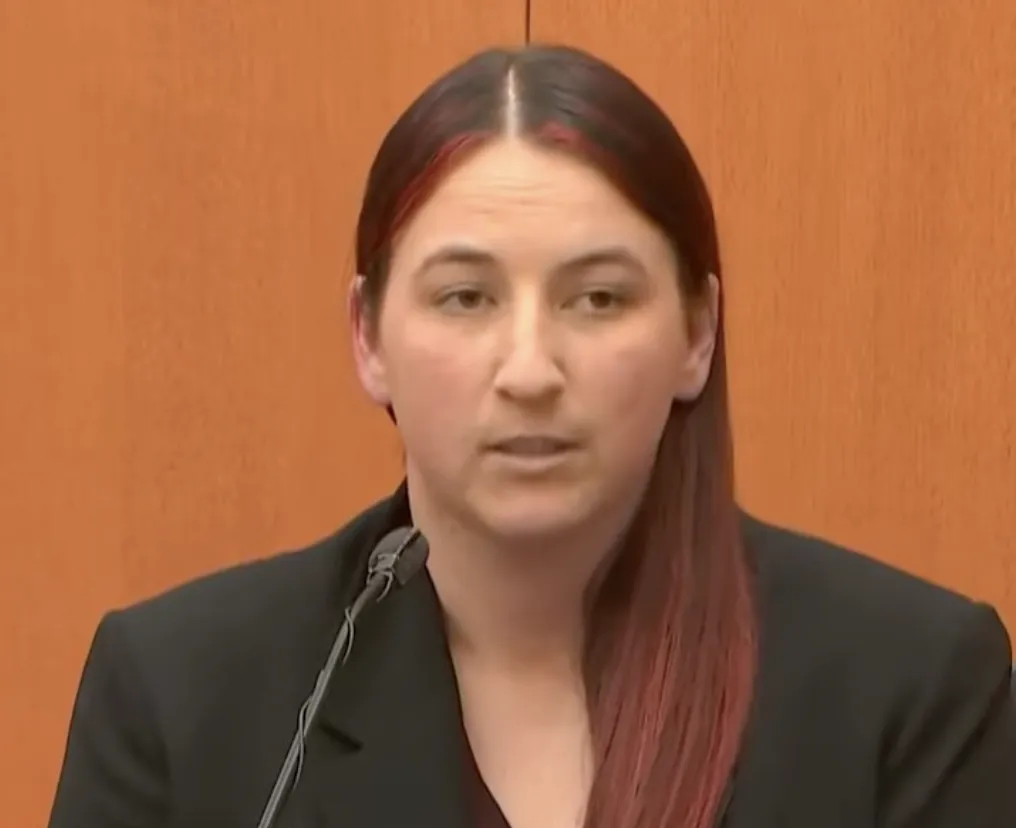
15:04 — Gipson's cross-examination wrapped up where Day 3 left off. Defense attorney Nester finished by establishing the house was searched a minimum of 10 separate times between Eric's death and February 2026, yet no fentanyl was ever found (35:48). Eric's brown work truck — the vehicle he used every day — was apparently never searched (49:55). And Eric's Apple Watch, previously described as wiped, actually had data on it (44:25).
Nester also scored a point on corroboration: investigators found copper cups (Kouri said they shared a drink), gummies (she said Eric may have taken one), a sheet on the floor (she said she pulled him off the bed for CPR), and step-count data consistent with her moving through the house before calling 911.
On redirect, the prosecution reframed: each return trip to the house was driven by new investigative information, not incompetence. Kouri consented to searches the night of the death and never stopped anyone from looking at anything. Gipson was released from the stand at 1:01:05.
Dr. Brianna Peterson: Five Times the Lethal Dose
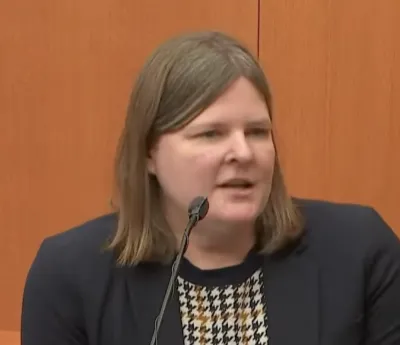
1:15:38 — Peterson walked the jury through the toxicology results from Eric's blood and stomach contents, received from the Utah Medical Examiner on March 8, 2022.
The blood: Fentanyl at 15 nanograms per milliliter — five times the lowest concentration reported in fentanyl deaths (3 ng/mL). Norfentanyl at 3.3 ng/mL, meaning Eric's body had begun metabolizing the drug before he died (1:26:05).
The stomach: This is where it gets layered. Peterson confirmed fentanyl at 20,000 ng/mL, norfentanyl at 52 ng/mL, and a new substance: acetylfentanyl at 29 ng/mL (1:34:38). Acetylfentanyl is a fentanyl analog with no pharmaceutical use — it's solely illicit, often found as a byproduct in street-manufactured fentanyl. Its presence is a marker that the fentanyl came from an illegal source.
Also in the stomach: quetiapine at 16,000 ng/mL — Kouri's antipsychotic — but the math works out to only about 11 milligrams, well below a standard prescription dose. Ethanol was detected, but at levels consistent with postmortem bacterial production rather than a significant drink.
The defense cross (1:42:19) focused on an alternative timeline. Attorney Wendy Lewis got Peterson to agree that fentanyl takes 15–60 minutes to show up in the bloodstream after ingestion, and that Eric could have taken the fentanyl himself, then had a drink 15–20 minutes later, then taken quetiapine — all before dying. Peterson agreed it was "a possibility" but stressed there were too many unknown variables to favor any single hypothesis (2:02:28).
Lewis also tried to argue that the presence of norfentanyl suggested Eric had prior fentanyl exposure — someone tolerant enough to begin metabolizing it. Peterson disagreed: "I don't agree with that." A rare moment where an expert flatly rejected a defense theory.
Building the Digital Chain
Three short witnesses laid groundwork for what comes later.
Detective Frank Root (Summit County) (2:08:15) collected two phones from Robert Josh Grossman — a white iPhone 12 and a green iPhone 11 Pro Max. Both were inoperable when received; Grossman said he'd "broken them on accident." The phones were shuttled back and forth between Grossman and law enforcement multiple times, raising chain-of-custody questions the defense flagged. Root was not released — the defense plans to recall him.
Cheney Eng-Tow (IWRCFL digital forensics) (2:30:19) extracted data from both phones using GrayKey hardware and Cellebrite Physical Analyzer. Hash values matched at every step — mathematically verifying no data was altered.
Brian Holden (Utah State Crime Lab) (2:44:45) tested 19 physical items seized from the Richins home. He was asked to test only for fentanyl. He found none. On cross, Nester drew out the critical detail: Holden was never asked to test for oxycodone, hydrocodone, or OxyContin — all Schedule II opioids — in the four years since the items were seized (2:51:36). The empty hydrocodone bottle from Eric's nightstand wasn't even among the 19 items submitted.
Carmen Lauber: Four Drug Deals and a Paper Trail
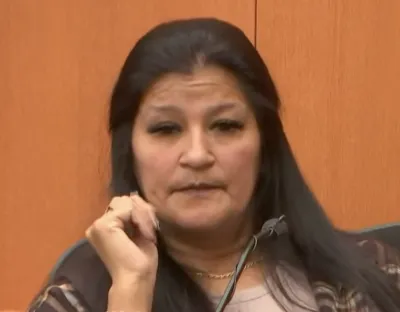
4:17:06 — The prosecution's most important witness. Lauber, 54, cleaned houses for Kouri's aunt Doreen and knew the family through that work. She has felony drug convictions, a learning disability, and has been sober for four years — the longest stretch since she started using in sixth grade. She's testifying under four separate immunity deals requiring truthful testimony or she loses all protection.
Prosecutor Bledworth walked her through four purchases she says she made at Kouri's request:
Purchase 1 (early February 2022): Kouri texted asking for "pain meds for an investor." Lauber reached out to Susan Kohler, a coworker of Doreen's. Lauber fronted $600 of her own money; Kohler returned with an envelope of pills. Kouri picked them up from Lauber's driveway the next morning and reimbursed the cash.
Purchase 2 (~February 11, 2022): Kouri said her investor "needed something stronger." Lauber connected with Robert "Robbie" Crosier through a mutual contact. When Crosier said what he had was fentanyl, Lauber texted Kouri. The response: "Okay, go ahead and get him" (4:45:55). Kouri left $1,000 cash in a closet at a small Midway house she was flipping — inside a box with coffee cups, back door left unlocked. Lauber's friend Nancy Peters drove her to a Maverick gas station in Draper. Crosier returned with 15–20 light green round pills. Selfies from Lauber's phone, timestamped February 11, 2022 at 5:00 PM, placed her in Nancy's car heading south on Provo Canyon.
Purchase 3 (late February 2022): Kouri asked for "something stronger" — referencing "the Michael Jackson stuff." Lauber Googled it: propofol. Same routine — $1,000 at the Midway house, Nancy driving, Maverick gas station, Crosier returning with 15–20 lighter blue pills.
Purchase 4 (~March 9, 2022 — after Eric's death): This is the one that landed hardest. After learning Eric died, Lauber called Kouri: "Please tell me these pills were not for him." Kouri's response: "No. Eric passed away from a brain aneurysm" (5:17:27). Days later, Kouri texted asking if Lauber still had her hookup. This time Kouri wrote Lauber a $1,300 check with the memo line "construction clean midway" (5:57:00). Lauber testified she had never cleaned a house for $1,300 in her life. The check, the deposit slip, and the front and back were all admitted into evidence.
When Crosier later offered more pills, Lauber relayed the message. Kouri's reply: "No. Her investor had left town."
The Escalation
The Cross: "Give Us the Details"
6:06:00 — Defense attorney Wendy Lewis spent the rest of the day — over two hours — systematically dismantling Lauber's credibility. The cross was still ongoing when the judge recessed for the evening.
What She Was Facing
Lewis established the stakes. When arrested in April 2023, Lauber was looking at two first-degree felonies (5-to-life each), a third-degree felony, plus new charges for marijuana and felon-in-possession of a firearm. Federal prosecutors raised the possibility of a distribution-resulting-in-death charge — 20-year minimum mandatory.
What the Detectives Said
Lewis played a video clip from Lauber's May 2, 2023 interview for the jury (7:39:00). In it, detectives tell Lauber the Wasatch County prosecutor is looking to "pull your drug court deal and ask for seven years." The exception: "Give us the details that will ensure Kouri gets convicted of murder."
Other quotes from recorded interviews Lewis read to the jury:
"Lucky for you, we're on your side, and as long as this relationship continues, we're here for you."
Detective O'Driscoll to Carmen Lauber, May 2023"You're getting a big giant get-out-of-jail-free card."
Detective Maynard to Carmen Lauber, May 2023Detective O'Driscoll also told Lauber "this whole case is hinged on you" and she needed to "finish painting the picture." Lauber's own responses were equally damaging: she asked detectives for a "blueprint," said "I'll do whatever it takes," and at one point told them "just write it all down and I'll sign it" (7:41:00).
The Story That Kept Changing
Lewis walked Lauber through her seven police interviews, exposing contradictions on nearly every key detail. Here's how the account shifted:
| Detail | May 2 Interview | May 3 Interview | Trial Testimony |
|---|---|---|---|
| How many purchases? | 3 total | 3 total | 4 total changed |
| Susan's pills went where? | Fire pit at Midway house | — | Handed to Kouri in driveway changed |
| Who paid Susan? | "Money was in the fire pit" | "I fronted $600 myself" changed | "I fronted $600" |
| Knew it was fentanyl? | "Never dealt with fentanyl" — got Roxy's | "First two deals weren't fentanyl" changed | Told Kouri it was fentanyl; she said "go ahead" new |
| Last buy: before or after Eric died? | All before Eric died | Detectives corrected: one was after changed | Confirmed one after |
| Direct handoff to Kouri? | "Never exchanged" | — | Yes — driveway changed |
Lewis's sharpest line: the only people who put the word "fentanyl" in Lauber's head were the detectives themselves. Lauber partially conceded: "They're the ones that told me Eric passed away from fentanyl" (7:49:00).
High the Whole Time
Lewis walked through Lauber's drug court docket (6:15:00), showing she tested positive for methamphetamine or amphetamines on February 11, March 1, March 3, and March 16, 2022 — the entire period of the alleged drug purchases. Lauber told detectives her brain was "fried" and her memory was "foggy" from decades of drug use. Lewis highlighted the paradox: four years later, Lauber now remembers details she couldn't recall one year after the events.
Legal Sidebar
Cellebrite evidence fight — The defense objected when the prosecution tried to admit text messages (Exhibit 2-44) extracted via Cellebrite through Lauber without a technical authentication witness. The judge ruled Lauber could authenticate the content as a participant in the text exchange, but the Cellebrite header/branding had to be redacted. The exhibit was relabeled 2-44R.
Juror sketching incident (8:31:00) — A juror passed a note reporting that a spectator was sketching jury members and identifying them by juror number. The sketchbook was confiscated, the sketches removed, and the person was permanently banned from the courtroom.
Day 4 Scoreboard
Prosecution's Strongest Cards
- Acetylfentanyl in Eric's stomach — a fentanyl analog with no pharmaceutical use, found only in illicitly manufactured fentanyl. Its presence eliminates any theory that Eric obtained pharmaceutical fentanyl through a prescription or hospital
- The $1,300 check — written by Kouri to Carmen after Eric's death, with the memo "construction clean midway." Lauber never cleaned a house for Kouri. Documentary evidence that doesn't depend on memory
- Quetiapine hadn't reached Eric's blood — Kouri's prescription antipsychotic was in his stomach at 16,000 ng/mL but hadn't absorbed. Combined with 5x lethal fentanyl, the implication is clear: both substances were put in something Eric consumed shortly before death
Defense's Strongest Cards
- "Give us the details that will ensure she gets convicted" — played on video for the jury. Detectives also called it a "get-out-of-jail-free card" and told Lauber the "whole case is hinged on you." Hard to unhear
- Carmen's story changed across seven interviews — the number of purchases, location of drop-offs, whether she knew it was fentanyl, and whether the last buy was before or after Eric's death all shifted. She asked detectives to "write it all down and I'll sign it"
- 19 items tested negative — and only for fentanyl — the crime lab never tested for oxycodone, hydrocodone, or OxyContin. The nightstand pill bottle wasn't even submitted. The defense is building a case that the investigation had tunnel vision
Where the Audience Stands
Public Sentiment After Day 4
Based on ~700 comments across YouTube livestreams and r/KouriRichins
Guilt sentiment bounced back. Day 3's 80/20 shifted to roughly 88/12. Carmen's testimony — despite the brutal cross — gave the audience a concrete narrative of how the drugs got to Eric. The $1,300 check and "brain aneurysm" lie resonated more than the inconsistencies.
YouTube (~92% guilty) was overwhelmingly sympathetic to Carmen. Commenters were outraged by Lewis's treatment of her learning disability and recovery history. The defense's aggressive approach backfired with this audience — "this defense is awful" and "the defense just stuck a fork in themselves" were among the top-liked comments.
Reddit (~85% guilty) stayed more analytical. The sub focused on documentary evidence — the check, the texts, the selfie timestamps — arguing Carmen's memory problems are irrelevant because the paper trail speaks for itself. Even the most doubt-leaning commenters said they believe Kouri is guilty; their concern is whether the prosecution is presenting the case effectively enough for a jury without outside context.
Coming Up: Day 5
Carmen Lauber returns at 8:30 AM, still mid-cross-examination. Wendy Lewis was working chronologically through seven police interviews and had only covered two — there's likely substantial cross remaining, plus redirect from the prosecution. The defense hasn't yet addressed the later May 2023 interviews, which may contain more contradictions. The question heading into Day 5: can the prosecution rehabilitate Carmen on redirect, or has the damage been done?
This is part of Madness & Motive's ongoing coverage of the Kouri Richins trial. Watch the full Day 4 video on YouTube.