Quick Background
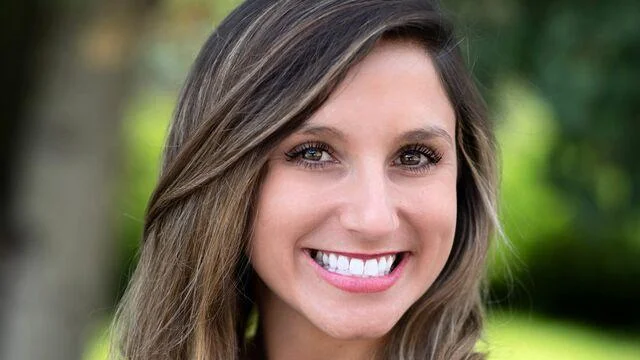 Kouri Richins
The Defendant
Kouri Richins
The Defendant
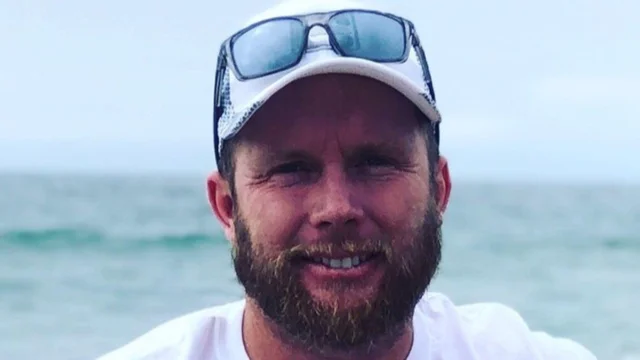 Eric Richins
The Victim
Eric Richins
The Victim
Kouri Richins is charged with aggravated murder and attempted murder for allegedly poisoning her husband Eric with fentanyl on March 3–4, 2022. Eric Richins was found dead at home with five times the lethal dose of fentanyl in his system.
Day 4 recap: The toxicologist confirmed an illicit fentanyl marker in Eric's stomach, then Carmen Lauber described four drug purchases for Kouri — before the defense played detective interview footage of promises and pressure. Full Day 4 recap here.
Carmen Lauber: Two Days on the Stand
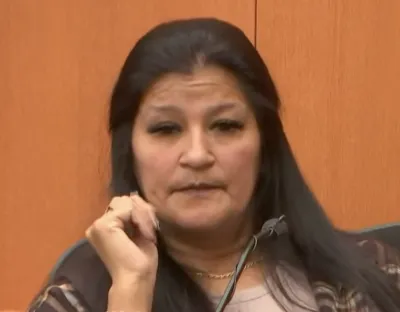
Carmen returned for her second day of cross-examination. Defense attorney Lewis walked through all seven police interviews — April 27 through May 13, 2023 — highlighting every inconsistency: three purchases or four? Fire pit or driveway? Oxycodone or fentanyl?
The sharpest exchange: Lewis pinned down that Kouri never explicitly asked for fentanyl. What Kouri wanted was "something stronger, like the Michael Jackson stuff" (1:15:48). Carmen relayed the request to Crozier, whose answer was blunt: "It's not a pharmacy. I don't know what you want" (1:21:49).
Why does "the Michael Jackson stuff" matter? Michael Jackson died from a propofol overdose in 2009 — a surgical anesthetic. Asking for "the Michael Jackson drug" implies seeking something powerful enough to render someone unconscious or worse, regardless of what pills Carmen ultimately obtained.
Lewis then walked through the cooperation agreement (2:51:32) — no jail time, probation transferred to Summit County, permission to move to Las Vegas, no drug testing. Carmen faced five years to life on drug charges. When Lewis asked about her learning disability, Carmen teared up and the courtroom went quiet.
On redirect (2:54:17), the prosecution walked Carmen through prior consistent statements showing her core account — Kouri asked for drugs, Carmen got drugs, Carmen delivered drugs — remained stable across all seven interviews. The peripheral details shifted; the spine didn't.
The prosecution then moved to admit all 932 pages of Carmen's interview transcripts to show the full arc. The judge denied wholesale admission (3:23:52) but called the legal argument "persuasive" — the prosecution just hasn't shown all 932 pages are consistent with her trial testimony. Specific portions can still come in, and Carmen remains under subpoena.
Why this matters. Lewis spent two days surfacing inconsistencies from Carmen's interviews. The prosecution wanted the full transcripts to show those inconsistencies are peripheral — the core narrative held. Without them, the jury has every contradiction in detail but none of the rehabilitating context. The prosecution can bring targeted excerpts in later, but for now, advantage defense.
Anna Isbell: The Phone Call
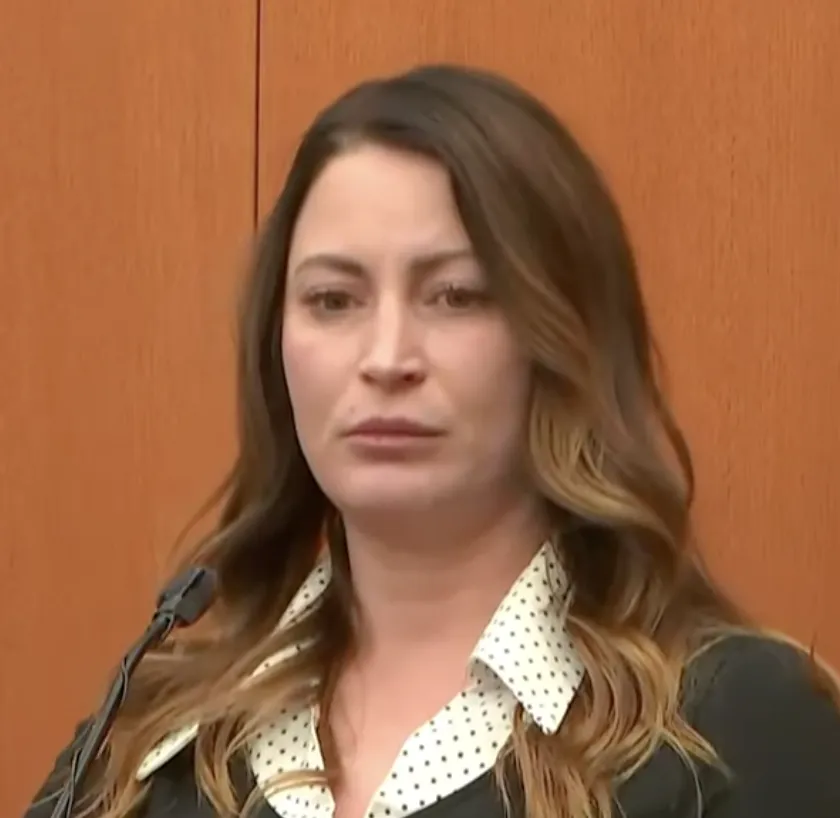
Anna Isbell took the stand visibly shaking, still processing the death of her boyfriend Hayden Jeffs — a handyman who did work for Kouri.
Her testimony centered on one phone call. On January 22, 2022 — six weeks before Eric died — Kouri called Hayden while Anna was in the room. She stepped out briefly. When she returned, Hayden was agitated.
"Hayden was just saying, 'Fuck that client.' ... Fentanyl. What? Fuck that."
Kouri's response: "Okay, thank you."
Anna Isbell, recounting the phone call between Kouri and Hayden Jeffs (4:23:30)The judge immediately instructed the jury (4:23:49): Hayden's words are an out-of-court statement and cannot be considered for their truth. The jury can only use them as context for Kouri's response — "Okay, thank you."
Why this matters. The prosecution's most dramatic moment of the day is legally limited. The jury heard "fentanyl" come out of a witness's mouth for the first time outside the Carmen/detective chain — but they've been told they can't use Hayden's words to prove Kouri actually asked for fentanyl. All they can weigh is her calm reaction: "Okay, thank you."
On cross-examination (4:54:14), Lewis extracted a detail that cuts against the prosecution's framing: what Anna actually heard Kouri say was that she was asking for "the Michael Jackson drug" — the same phrase Carmen Lauber testified Kouri used. Anna didn't even know what it meant. She considered Googling it during the call but got sidetracked because she initially thought Kouri was asking for a muscle relaxer.
Then Lewis asked the question directly: "Did you ever at that call hear Kouri ask for the drug fentanyl?" Anna's answer: "I did not."
Why this matters for the defense. That's now two independent witnesses — Carmen Lauber and Anna Isbell, in completely separate conversations — who heard Kouri use the phrase "the Michael Jackson drug." Neither heard her say "fentanyl." The Michael Jackson drug is propofol, a surgical anesthetic that Crozier confirmed can't be bought on the street. If Kouri was consistently asking for propofol — not fentanyl — the prosecution's theory that she deliberately sought out fentanyl to poison Eric gets harder to sustain.
Lewis also pressed Anna on text messages with Detective O'Driscoll, suggesting the detective had pressured a reluctant witness. The judge questioned the authenticity of part of the exhibit. Anna was combative with Lewis throughout.
Robert Crozier: The Link That Broke
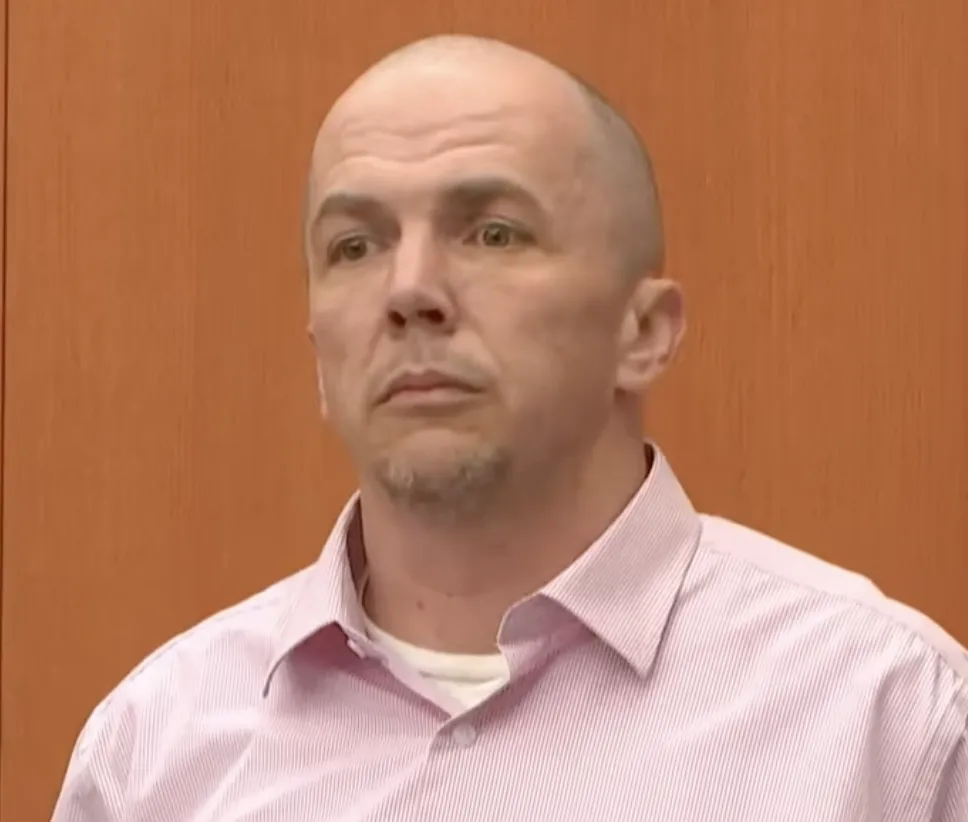
The prosecution called Crozier knowing his testimony would be complicated. Under direct, he was evasive and couldn't remember details from his own signed affidavit. Then he delivered the line that rattled the courtroom: he never sold fentanyl to Carmen Lauber (6:09:23). Only his prescription oxycodone — light blue and light green pills, exchanged at a Maverick gas station in Draper.
When asked about propofol — the drug that killed Michael Jackson — Crozier fumbled the word ("Prohypnol or something... propalt") and offered a response Reddit spent the evening dissecting:
"Nobody's ever asked me for that... I doubt it. It seems like they would keep that under a tight lock and key."
Robert Crozier, asked if propofol can be bought on the street (6:10:50)Lewis's demeanor shifted. After two days of aggressively questioning Carmen, she was cordial with Crozier — laughing off a typo in his affidavit that she'd made herself. The double standard was not lost on the audience.
Ramos Strikes Back on Cross
Prosecutor Ramos took the cross and landed several blows that didn't generate the same headlines but may matter more to the jury:
Crozier didn't get his pills from a pharmacy. He admitted buying from "one of the guys" (6:13:14) — street-level suppliers — meaning he had no way to verify whether the pills were genuine pharmaceutical oxycodone or counterfeit M30 tablets. By 2022, DEA lab testing found that six out of ten fentanyl-laced counterfeit pills contained a potentially lethal dose.
He admitted selling fentanyl — just not during this specific window. When Ramos asked what fentanyl sold for, Crozier answered "about the same" as oxy (5:50:54), confirming familiarity with the product. His defense is a timeline argument, not a categorical one.
His story changed. The prosecution entered an affidavit (5:37:26) — originally collected by the defense — showing that Crozier's earlier account was different from his trial testimony. The affidavit contained a drug name that Lewis admitted she had mistyped (5:58:33) during preparation, further muddying the record.
He couldn't tell pills apart by sight. The light blue pills, light green pills, and counterfeit M30s looked similar enough that even he couldn't always distinguish them.
Where the Prosecution's Case Stands
Marco Garaycochea: The Witness You Can't See

The judge ordered all camera feeds shut off when Garaycochea took the stand (34:48) — but not before Court TV had already broadcast his face. Based on courtroom observers, he testified as a drug expert on street terminology and the prevalence of counterfeit pills in Utah during 2022 — directly reinforcing Ramos's cross of Crozier: in a market flooded with counterfeits, a dealer who didn't test his own product can't guarantee what he sold.
Legal Sidebar
Mistrial motion (49:27) — The defense moved for a mistrial after a witness referenced "jail calls," potentially alerting the jury to Kouri's pretrial confinement. The judge issued a curative instruction. Motion denied, but the defense is preserving the record for appeal.
Reading the judge. Viewers noticed the judge correcting defense attorney Lewis repeatedly. But the substantive rulings tell a different story. The transcript ruling and hearsay instruction were arguably the two biggest legal wins of the day — and both went to the defense.
Day 5 Scoreboard
Prosecution's Strongest Cards
- "Fentanyl. What? Fuck that." — Anna Isbell placed the word "fentanyl" in a conversation with Kouri for the first time. Kouri's calm reply — "Okay, thank you" — is the first testimony outside the Carmen/detective chain connecting Kouri to a lethal request
- Crozier couldn't verify his own product — Ramos established Crozier bought from street dealers, not pharmacies, and couldn't distinguish pill types by sight. In a market where 6 in 10 counterfeit pills contained a lethal dose of fentanyl, his denial may prove less definitive than it first appeared
- Carmen's core story survived two days of cross — Seven interviews, shifting details, aggressive impeachment on her deal and learning disability. The central narrative held: Kouri asked for drugs, Carmen got drugs, Carmen delivered drugs
Defense's Strongest Cards
- The dealer said no fentanyl — Crozier testified under oath he sold prescription oxycodone, not fentanyl. If the jury takes him at his word, the prosecution's theory of how fentanyl reached Eric has a gap. The state called this witness — they can't claim surprise
- Carmen's deal is extraordinary — No jail, moved to Vegas, no drug testing, probation transferred. She admitted lying to detectives about her drug use (58:24) and about who she'd told about cooperating (27:41). The cooperation agreement gives the jury reason to question her motivation
- Lewis's double standard — Warm with Crozier, aggressive with Carmen. Both are addicts with credibility issues. The underlying point: why does the prosecution only vouch for one of them?
Where the Audience Stands
Public Sentiment After Day 5
Based on ~280 comments across YouTube livestreams and r/KouriRichins
Biggest single-day shift of the trial. Guilt sentiment dropped from 88% to 80% — back to Day 3 levels. Crozier's flat denial that he sold fentanyl was the catalyst. But the dip is driven almost entirely by YouTube's casual audience. Reddit held firm.
YouTube (~73% guilty) reacted viscerally. "Prosecution case is imploding" was a common refrain — but many still believe Kouri killed Eric. They're losing faith in the prosecution's ability to prove it. "I def think she's guilty, but damn they are doing their best to get her off" captured the mood.
Reddit (~85% guilty) held steady. The sub focused on Crozier's inability to verify his own supply, the counterfeit M30 epidemic, and his possible motive to change his story — a distribution-leading-to-death charge. Multiple top comments reminded panicking viewers: "We haven't even gotten to the walk the dog letter. Relax."
Coming Up: Day 6
The prosecution pivots to digital evidence — phone records, internet search history, and potentially Kouri's paramour. The "walk the dog" letter, found in Kouri's jail cell and described by the defense as fiction writing, looms over the second week.
This is part of Madness & Motive's ongoing coverage of the Kouri Richins trial. Watch the full Day 5 video on YouTube.